Short explorations of how audience, language and context change the way a message lands.
Communication experiment · 01
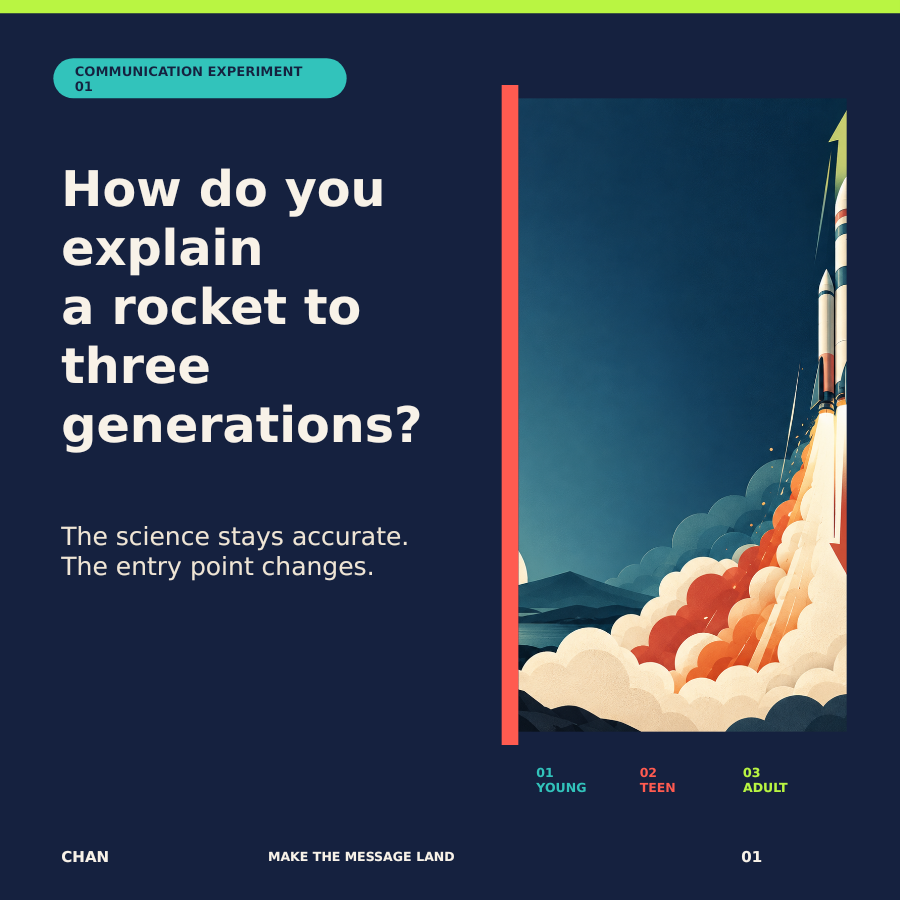
How do you explain a rocket to three generations?
No matter how old you are, you deserve to understand how science works. The challenge is choosing language and examples that make sense without talking down to anyone.
0105
Head
Identify the one scientific truth that must remain accurate.
Heart
Choose an example the particular listener can recognise.
Action
Ask the listener to explain it back in one clear sentence.
Communication observation · 02
What can a cinema crowd tell us about language?
Days of Being Wild is not a new film, and it can be found online. Yet I still paid S$24 to watch the restored Cantonese version in a cinema. Why?
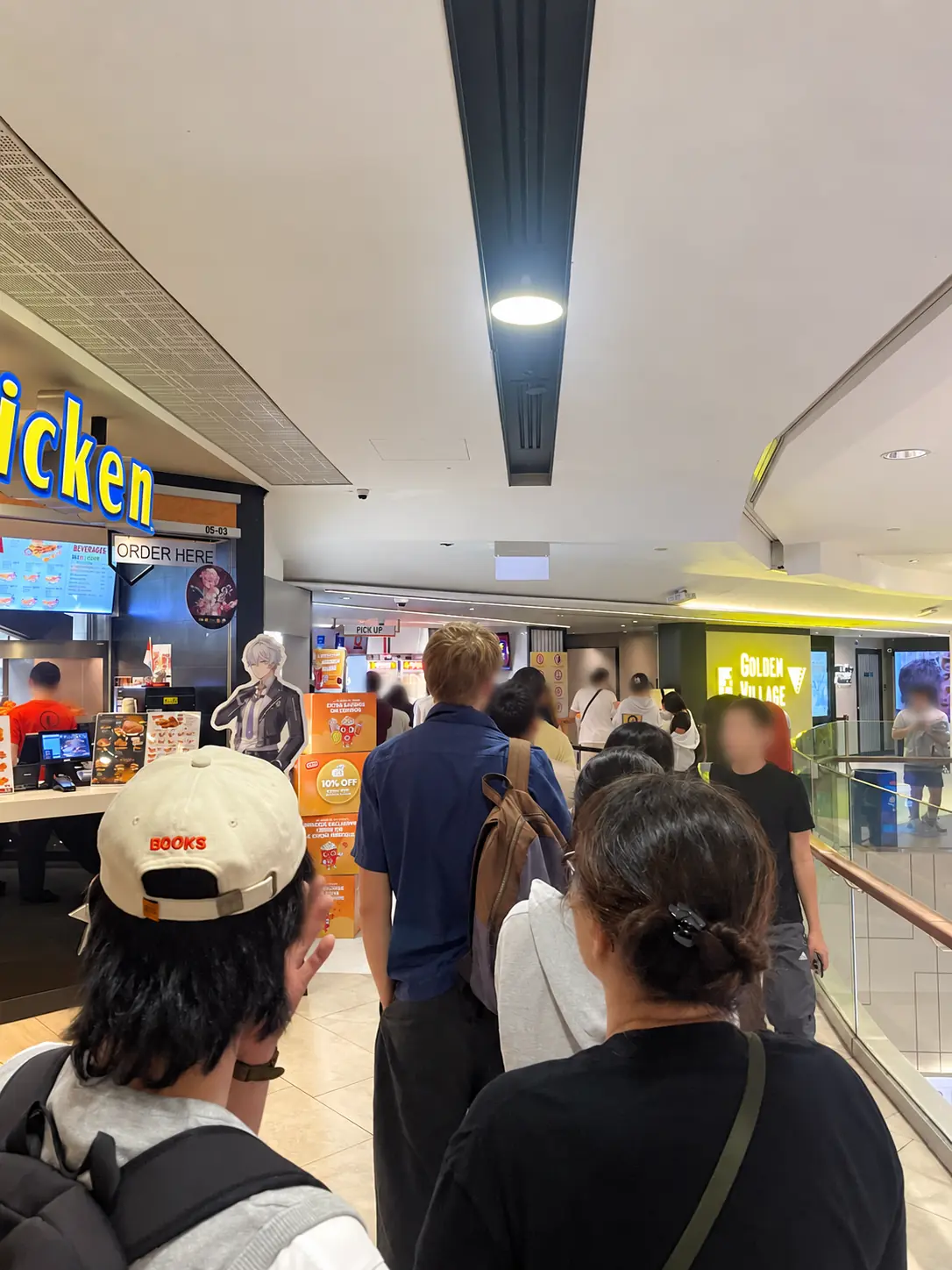
Days of Being WildPoster photographed by Chan. The photograph was cropped, straightened and enhanced for clarity.People still chose to gatherQueue photographed by Chan at Golden Village. Visible faces have been obscured for privacy.
Nearly fullDays of Being Wild Restored Cantonese screening · S$24 ticket
Sold out onlineBecause of You Ka Kui Observed while attempting to book at Shaw Lido
More than half fullThe Snowball on a Sunny Day Personal observation at Shaw Lido
Why I went
Partly, I wanted to experience the film as it was meant to be seen. I wanted the restored images on a large screen, the familiar voices filling the cinema and the feeling of being completely present with the story. But something else caught my attention when I arrived. I was not alone.
The screening was nearly full. People had chosen to leave their homes, queue for tickets and sit together in a cinema for a film more than three decades old.
What I noticed
These three screenings do not prove that there is a mass market for Cantonese films in Singapore. They are only observations from a small number of screenings. Still, seeing the queue and the turnout made me wonder what language can mean to an audience, especially when that language is not the one most commonly heard in public life.
The audience was willing to pay a higher-than-usual ticket price for films that could potentially be found elsewhere. This suggests that they were not gathering simply because they needed access to the content. The restored picture and cinema sound were certainly part of the attraction, but the experience also offered something that watching alone at home could not provide. People could hear the original voices, respond to familiar expressions and experience the humour, pauses and emotional rhythm of the language together.
What language carries
We often treat language primarily as a tool for transferring information from one person to another. However, language also affects how that information is felt. A translated sentence may communicate the same basic meaning, but it may not carry the same tone, cultural associations or emotional texture as the original.
Perhaps that was part of what brought people to these screenings. The films offered more than stories on a screen. They offered recognition, memory and a temporary sense of connection with others who found meaning in the same voices. The size of a community does not necessarily determine the depth of its response. An audience can be relatively small and still care enough to show up, pay more and experience something together.
A message can be factually correct and perfectly translated, yet still fail to connect with the people receiving it.
What this means for my work
As a workplace communication trainer, I help professionals move beyond delivering information. We clarify what an audience needs to understand, connect the message to what they recognise or value, and make the next step clear.
Did I merely transmit the information, or did I make the message land?